[TRADE_PLUGIN]BTCUSDT,BTCUSDT[/TRADE_PLUGIN]
Recent data reveals a dramatic consolidation in corporate Bitcoin purchasing activity. Michael Saylor's company, Strategy (formerly MicroStrategy), has emerged as the overwhelmingly dominant force, accounting for a staggering 98% of all Bitcoin acquired by corporate treasuries in the past month. This concentration marks a significant shift from the broader corporate movement that peaked in August 2025, when numerous firms were actively accumulating BTC. The current landscape shows other companies have reduced their Bitcoin purchases by 99% since that peak, effectively narrowing the $100 billion corporate Bitcoin movement down to a single, steadfast buyer. Data from CryptoQuant indicates that Strategy purchased 45,000 BTC in this period, solidifying its position not just as a participant but as the market's primary institutional accumulator. This development suggests a maturation phase where early speculative or trend-following corporate entrants have paused or exited, leaving conviction-driven, long-term holders like Strategy to continue building positions. For Bitcoin's price trajectory, this could imply reduced selling pressure from corporate treasuries in the near term, as the dominant holder is known for its 'hodl' strategy. However, it also highlights a potential vulnerability or concentration risk, where the actions of one entity can disproportionately impact narratives around institutional adoption. The retreat of other firms may be attributed to regulatory uncertainty, macroeconomic pressures, or a wait-and-see approach following the 2025 peak. Nonetheless, Strategy's unwavering commitment provides a powerful bullish signal, demonstrating deep conviction in Bitcoin's long-term value proposition as a treasury reserve asset. This dynamic sets the stage for Bitcoin's next major price moves to be increasingly driven by macroeconomic factors, ETF flows, and retail sentiment, even as one corporate giant continues to accumulate unabated.
Strategy Dominates Corporate Bitcoin Purchases as Other Companies Retreat
Michael Saylor's Strategy (formerly MicroStrategy) has become the lone dominant force in corporate Bitcoin acquisitions, accounting for 98% of all BTC bought by treasury firms in the past month. The $100 billion corporate Bitcoin movement has effectively narrowed to a single buyer, with other companies reducing their purchases by 99% since the August 2025 peak.
Data from CryptoQuant reveals Strategy purchased 45,000 BTC over the last 30 days—its largest monthly haul since April 2025. Meanwhile, all other Bitcoin treasury companies combined acquired just 1,000 BTC during the same period. This marks a dramatic reversal from October 2025, when firms outside Strategy represented 95% of net corporate Bitcoin purchases.
The collapse of broader corporate participation suggests the financing model that fueled the treasury boom—using company stock as collateral for Bitcoin acquisitions—may be losing steam. What was once touted as a widespread corporate movement tied to Bitcoin's price rally now appears concentrated in a single entity.
Bitcoin Mining Costs Surge to $80K as Profitability Craters
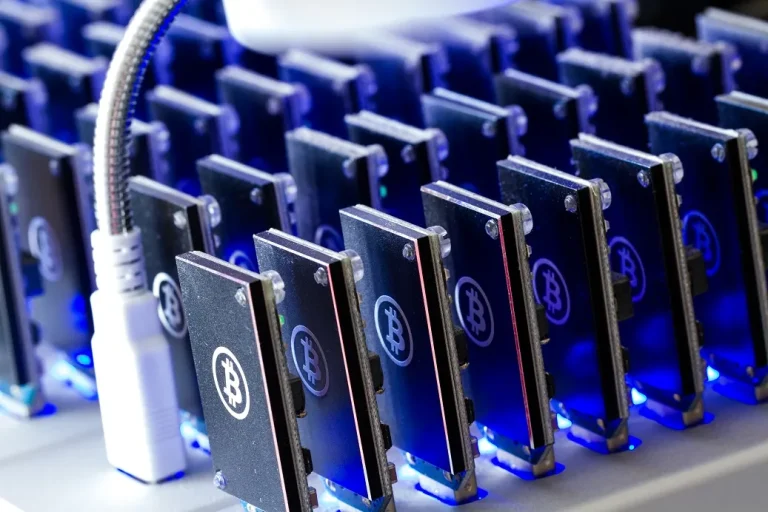
Bitcoin miners face mounting financial pressure as production costs outstrip rewards. CoinShares' March 2026 analysis reveals 15-20% of global mining operations now operate at a loss, with breakeven thresholds near $80,000 per BTC.
The hashprice collapse to $33/PH/s/day—approaching 2026's historic lows—has rendered older equipment particularly vulnerable. Operations paying above $0.06/kWh face existential risk as Bitcoin's price decline from $124,500 to $86,000 evaporates margins.
Public miners now spend $79,995 on average to produce each coin, creating unsustainable economics despite minor hashprice recoveries. Three consecutive difficulty adjustments underscore the industry's accelerating consolidation.
Fidelity Says the Burden of Proof Has Flipped on Bitcoin
Fidelity Digital Assets has shifted the narrative around Bitcoin in its latest report, arguing that the onus is now on skeptics to justify why they hold none of the cryptocurrency. With $5 trillion in assets under management, Fidelity's stance carries significant weight in institutional circles. The report, titled 'Getting Off Zero: Evaluating Bitcoin in 2026,' positions Bitcoin as a must-consider asset rather than a speculative gamble.
Data reveals Bitcoin as the top-performing asset class in 11 of the past 15 years, boasting superior risk-adjusted returns by both Sharpe and Sortino ratios. This performance undermines the traditional institutional argument that Bitcoin's volatility represents uncompensated risk. The numbers suggest the opposite—that ignoring Bitcoin may now be the riskier proposition.
Best Crypto Trading Signals Groups 2026
Cryptocurrency markets remain under pressure amid geopolitical tensions and macroeconomic headwinds, yet institutional adoption and regulatory clarity continue to fuel long-term optimism. Investors are increasingly turning to signal providers to navigate volatility and position for the next bullish cycle.
Jacob's Crypto Clan leads the pack with its Discord-based community, offering Bitcoin and altcoin signals grounded in technical and fundamental analysis. Founder Jacob Crypto Bury has garnered trust through precise market insights delivered in an accessible format for traders of all experience levels.
Whale Initiates 40x Leveraged Bitcoin Short with $70.2K Liquidation Threshold
A cryptocurrency whale has drawn market attention by opening a high-risk 40x leveraged short position on Bitcoin, with a liquidation price set at $70,270.83. Blockchain analytics reveal the trade was executed near the $69,000 level, underscoring the intensifying volatility in BTC derivatives markets.
Historical patterns suggest such aggressive shorts often face rapid liquidations. The same trader, James Wynn, previously suffered a similar fate—raising questions about the sustainability of ultra-leveraged bets against Bitcoin's momentum.
Derivatives platforms continue seeing record activity as traders amplify positions. This move coincides with Bitcoin's consolidation near all-time highs, where thin liquidity can trigger exaggerated price swings.
Bitcoin Shows Signs of Weakness as MACD Turns Bearish
Bitcoin's momentum is faltering as a bearish crossover appears on the daily MACD indicator, signaling potential downside risk. The MACD line has dipped below the signal line, while the histogram shifts into negative territory—a classic warning of weakening bullish pressure.
Meanwhile, the Relative Strength Index (RSI) has broken its uptrend, flipping former support into resistance. Analysts note the development coincides with BTC trading below key resistance levels from prior recovery attempts, suggesting consolidation may precede further declines.
Traders are watching for confirmation of this technical breakdown, which could accelerate selling if Bitcoin fails to reclaim lost ground. The cryptocurrency's struggle to maintain upward traction contrasts with earlier stabilization efforts following January's downturn.




Log in to Reply
Log in to comment your thoughtsComments